
Month: April 2026 (page 1 of 1)

graco crib 4 in 1 instructions

Graco 4-in-1 Crib Instructions: A Comprehensive Guide

Graco offers versatile 4-in-1 cribs‚ evolving from infant to full-size beds; assembly typically takes under an hour‚ aided by clear manuals and included hardware․

These cribs‚ like the Solano and Read-With-Me models‚ convert seamlessly through toddler‚ daybed‚ and full-size phases‚ providing lasting value and adaptability․

However‚ historical Graco and Simplicity recalls highlight crucial safety checks‚ particularly regarding hardware tightness and potential entrapment hazards for infants․

Understanding the Graco 4-in-1 Crib Features

Graco 4-in-1 convertible cribs are designed with adaptability in mind‚ offering a long-term sleep solution for your child․ These cribs seamlessly transition through four distinct stages: a traditional crib for infants‚ a toddler bed for growing children‚ a daybed for expanded comfort‚ and finally‚ a full-size bed to accommodate older kids․

Key features often include adjustable mattress heights‚ allowing you to lower the mattress as your baby begins to sit and stand‚ ensuring their safety․ Many models‚ such as the Solano‚ incorporate convenient features like attached changing tables with drawers for streamlined nursery organization․ The Read-With-Me model even includes a built-in bookshelf!

The conversion process is generally straightforward‚ utilizing the existing crib frame and requiring minimal additional parts – though a full-size bed conversion kit is necessary for the final stage․ Understanding these features upfront will simplify assembly and maximize the crib’s lifespan‚ providing years of use and value․

Identifying All Parts Included

Before beginning assembly‚ carefully inventory all components against the parts list in the Graco crib’s instruction manual (like Graco 04521-331-MB)․ Typically‚ you’ll find a headboard‚ footboard‚ two side rails‚ a mattress support system (often adjustable)‚ and necessary hardware – screws‚ bolts‚ and potentially wood dowels․

If your model includes a changing table‚ expect additional parts like a changing pad‚ drawer slides‚ and drawer components․ Conversion kits‚ purchased separately for the full-size bed stage‚ will contain side rails and support slats specific to a full mattress․

Missing parts are a common assembly issue‚ so verifying everything is present before you start saves time and frustration․ The manual will detail each part’s appearance and function; familiarize yourself with these details to ensure correct installation throughout the process․

Tools Required for Assembly

Assembling your Graco 4-in-1 crib generally requires minimal tools‚ contributing to its user-friendly design․ A Phillips head screwdriver is essential for securing most screws and bolts․ While some assemblies can be managed with just this‚ a ratchet set with Phillips head bits can significantly speed up the process․

A rubber mallet can be helpful for gently tapping pieces together‚ particularly when using wood dowels․ A level is crucial for ensuring the mattress support is even and stable․ Though often included‚ a hex key (Allen wrench) may be needed for specific hardware․

Power tools are generally not recommended‚ as they can easily overtighten screws and damage the wood․ Prioritize hand tools for controlled assembly and refer to the manual for specific tool recommendations․

Assembly Instructions: Crib Mode

Graco crib assembly begins with attaching side rails‚ then installing the mattress support‚ and finally securing the headboard and footboard for a stable base․

Attaching the Side Rails

Carefully unpack all components and identify the side rails‚ ensuring you have the correct pieces for each side of the crib․ Typically‚ Graco cribs utilize a bolt and locking washer system to secure the side rails to the headboard and footboard․

Align the pre-drilled holes on the side rails with those on the headboard and footboard․ Insert the bolts through the holes and hand-tighten the locking washers․ Do not fully tighten at this stage; leave some play for alignment during the next steps․

Once all four side rails are loosely attached‚ double-check that the crib frame is square and level․ Now‚ using the provided wrench or Allen key‚ firmly tighten all bolts and locking washers․ Ensure they are snug but avoid over-tightening‚ which could damage the wood․ Regularly inspect these connections for tightness throughout the crib’s use․

Installing the Mattress Support

Locate the mattress support board and the corresponding hardware – often metal brackets and screws․ Graco cribs typically offer multiple height adjustments for the mattress support‚ accommodating your baby’s growth stages․

Select the desired height setting‚ aligning the mattress support brackets with the appropriate slots inside the crib frame․ Insert the screws through the brackets and into the pre-drilled holes in the crib frame‚ hand-tightening initially․

Once all brackets are in place‚ firmly tighten the screws with a screwdriver․ Ensure the mattress support is level and securely fastened․ Regularly check the tightness of these screws‚ especially after converting the crib to different modes․ A properly installed mattress support is crucial for infant safety‚ preventing gaps and ensuring a stable sleep surface․

Securing the Headboard and Footboard

Begin by positioning the headboard and footboard upright‚ ensuring they are oriented correctly – often indicated by pre-drilled holes or decorative features․ Align the headboard and footboard with the side rails‚ utilizing the provided connecting hardware‚ typically bolts and locking washers․

Insert the bolts through the side rails and into the corresponding holes in the headboard and footboard; Securely fasten with the locking washers and nuts‚ hand-tightening initially to allow for adjustments․

Once all connections are made‚ firmly tighten the bolts with a wrench or Allen key․ Verify the headboard and footboard are stable and securely attached to the side rails‚ creating a rigid crib structure․ Regularly inspect these connections for tightness‚ especially after any crib mode conversions․
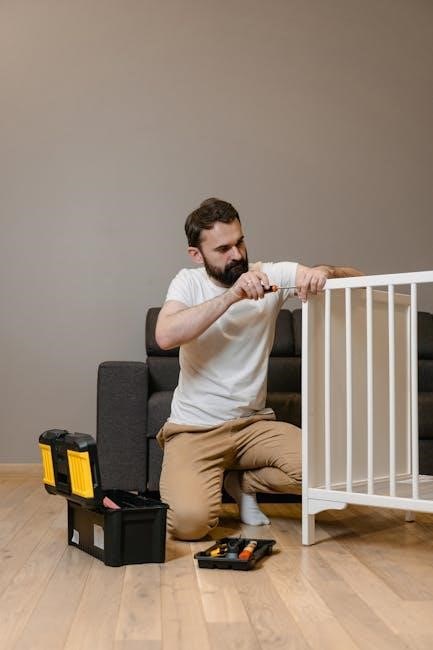
Conversion to Toddler Bed

Transitioning to toddler mode involves removing the crib side rails and installing a dedicated toddler guardrail for safety‚ alongside mattress support adjustments․

Removing Crib Side Rails

To safely convert your Graco 4-in-1 crib to a toddler bed‚ the first step is carefully removing the crib side rails․ Begin by loosening all screws or bolts securing the rails to the headboard and footboard – do not fully remove them yet․ Support the rail while loosening the final fasteners to prevent accidental dropping․

Once all hardware is loosened‚ gently lift the side rail upwards and outwards‚ detaching it from the crib frame․ It’s helpful to have a second person assist with this step‚ especially for larger rails․ Repeat this process for the opposite side rail․

Important: Retain all removed hardware (screws‚ bolts‚ and any connecting pieces) in a safe place‚ as you may need them when converting the crib back to its original configuration or for future assembly needs․ Ensure the crib frame is stable after rail removal before proceeding to the next step․

Installing the Toddler Guardrail

After removing the crib side rails‚ installing the toddler guardrail is crucial for your child’s safety․ Locate the toddler guardrail kit – it may have been included with the crib or purchased separately․ Align the guardrail with the designated mounting points on the crib frame‚ typically on one side where a side rail was previously attached․

Secure the guardrail using the provided screws or bolts‚ ensuring they are tightened firmly but not over-tightened․ Double-check that the guardrail is securely fastened and doesn’t wobble․ The guardrail should extend along a significant portion of the crib’s length‚ preventing accidental roll-offs․

Verify the guardrail’s stability by applying gentle pressure․ A properly installed guardrail is essential for a safe transition to the toddler bed configuration‚ providing a secure sleep environment for your growing child․

Adjusting Mattress Support for Toddler Mode

When converting your Graco 4-in-1 crib to toddler mode‚ lowering the mattress support is a vital safety step․ This prevents your increasingly mobile toddler from climbing out of the crib․ Locate the mattress support adjustment mechanism – typically involving lowering the metal supports within the crib frame․

Carefully detach and reposition these supports to the lowest setting․ Ensure the mattress rests securely on the adjusted supports‚ maintaining a firm and level sleep surface․ Double-check that all supports are locked into place‚ preventing accidental raising․

A lower mattress position significantly reduces the risk of falls and provides a safer environment as your child begins to stand and explore․ Regularly inspect the support system for any signs of loosening or damage․

Conversion to Daybed Mode

To transition to daybed mode‚ simply remove the toddler guardrail‚ utilizing the existing crib frame as a comfortable and stylish daybed structure․

Removing Toddler Guardrail

Transitioning your Graco 4-in-1 crib to daybed mode begins with the safe removal of the toddler guardrail․ Carefully inspect the guardrail’s attachment points‚ typically secured with bolts or hooks‚ referencing your specific model’s assembly instructions for precise details․

Loosen and detach all fasteners‚ ensuring you retain them in a safe place for potential future re-installation․ Gently lift the guardrail‚ maneuvering it to clear the crib frame․ It’s often helpful to have a second person assist with this step‚ especially with larger guardrails․

Once removed‚ inspect the crib frame for any remaining hardware or sharp edges․ Ensure all surfaces are smooth and free of protrusions to prevent accidental injury․ Proper removal of the guardrail is crucial for creating a safe and functional daybed configuration․

Utilizing Existing Crib Frame

Converting your Graco 4-in-1 crib to daybed mode cleverly utilizes the existing crib frame‚ minimizing the need for additional purchases․ After removing the toddler guardrail‚ the crib essentially transforms into an open daybed platform․

Ensure the mattress support is positioned at the lowest setting to maintain a safe height for your child․ This prevents accidental roll-offs and provides easy access․ The inherent stability of the crib frame provides a secure base for the mattress․

Consider adding soft bedding and pillows to enhance comfort and create a cozy daybed environment․ Regularly inspect the frame for any loose hardware or structural weaknesses‚ maintaining a safe and reliable sleeping or lounging space for your growing child․

Conversion to Full-Size Bed
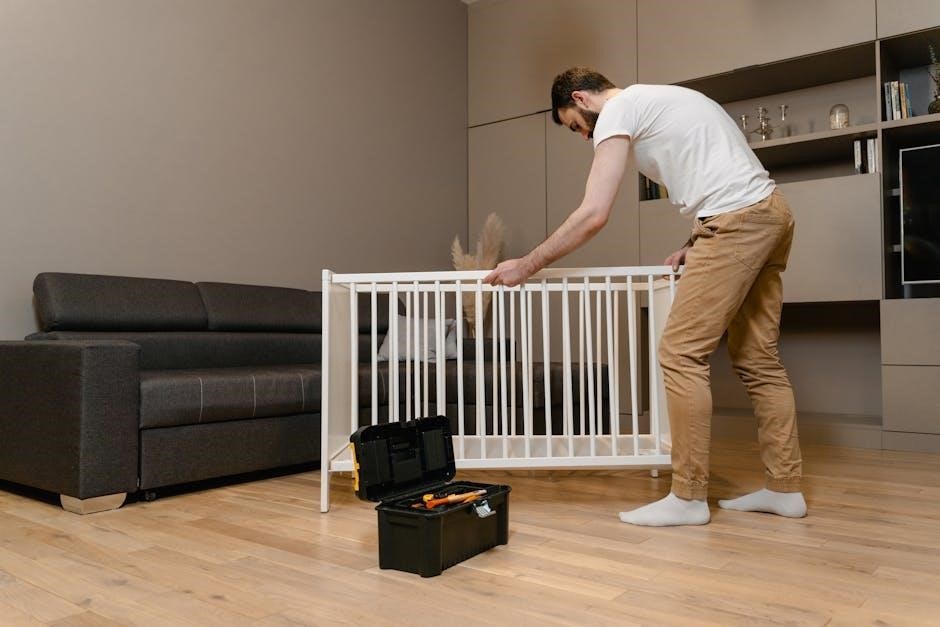
Transitioning to a full-size bed requires a separate conversion kit‚ attaching to the existing headboard and footboard for extended use and comfort․

Purchasing and Installing the Full-Size Bed Conversion Kit

To convert your Graco 4-in-1 crib to a full-size bed‚ a dedicated conversion kit is essential‚ as it isn’t included with the initial crib purchase․ These kits are readily available from major retailers like Amazon and through the Graco website‚ ensuring compatibility with your specific crib model – verifying the model number is crucial before ordering․

Installation typically involves attaching side rails and a center support beam to the existing headboard and footboard of the crib․ The kit will include all necessary hardware‚ and the instruction manual provides a step-by-step guide․ Carefully follow these instructions‚ ensuring all bolts are securely tightened for stability and safety․ Double-check all connections before allowing a child to use the converted bed․

Remember to retain the original crib instructions for reference‚ as they may contain helpful diagrams or tips․ Proper installation is paramount for a safe and durable full-size bed․

Attaching the Headboard and Footboard to the Kit

Once the full-size bed conversion kit’s frame is assembled‚ the next step involves securely attaching the existing Graco crib’s headboard and footboard․ This process utilizes the pre-drilled holes on both the kit’s frame and the crib components‚ ensuring a stable connection․

The conversion kit will provide specific bolts and hardware designed for this attachment․ Carefully align the headboard and footboard with the corresponding points on the kit’s frame‚ and hand-tighten the bolts initially․ Once all bolts are in place‚ use a wrench or screwdriver to fully tighten them‚ ensuring a firm and secure fit․

Double-check all connections to confirm stability before proceeding․ A wobbly connection could compromise the bed’s integrity and pose a safety risk․ Refer to the kit’s instruction manual for detailed diagrams and torque specifications․

Adding Mattress Support for Full-Size Bed

With the headboard and footboard securely attached to the full-size conversion kit‚ the final step is installing the mattress support system․ The conversion kit will include slats or a platform designed to support a standard full-size mattress‚ differing from the crib’s adjustable mattress height options․

Carefully position the slats or platform within the kit’s frame‚ ensuring they are evenly spaced and securely fastened․ Most kits utilize screws or bolts to secure the support‚ providing a stable base for the mattress․ Verify that all screws are tightened appropriately‚ avoiding over-tightening which could damage the frame․

Before placing the mattress‚ inspect the support system for any gaps or instability․ A properly installed support is crucial for safety and comfort․ Always use a full-size mattress designed for use with a bed frame․

Safety Considerations & Recall Information

Prioritize hardware tightening and entrapment hazard checks; past Graco & Simplicity recalls involved suffocation risks‚ emphasizing vigilant assembly and ongoing safety inspections․

Ensuring Proper Hardware Tightening

Consistent and thorough hardware tightening is paramount for Graco 4-in-1 crib safety․ Regularly inspect all bolts‚ screws‚ and connections‚ ensuring they remain firmly secured throughout the crib’s lifespan and each conversion stage․

Loose hardware presents a significant safety hazard‚ potentially leading to structural instability and creating gaps where a child could become entrapped․ Utilize the appropriate tools – often included with the crib – and avoid over-tightening‚ which can strip threads or damage the wood․

Pay particular attention to connections between the side rails‚ headboard‚ footboard‚ and mattress support․ A wobble or any movement indicates a need for re-tightening․ Document tightening checks as part of routine nursery maintenance‚ especially after converting the crib to different modes (toddler bed‚ daybed‚ full-size bed)․

Remember‚ consistent vigilance regarding hardware is a crucial preventative measure against potential accidents․

Checking for Entrapment Hazards

Regularly inspect your Graco 4-in-1 crib for potential entrapment hazards‚ a critical safety measure given past recalls involving Graco and Simplicity cribs․ Focus on areas where a child’s head‚ limbs‚ or clothing could become caught․

Specifically‚ examine the spaces between the mattress and the crib sides‚ ensuring they are within the required safety standards – no more than two finger widths apart․ Check for any loose or protruding hardware‚ sharp edges‚ or gaps in the headboard or footboard․

As the crib converts to different modes‚ reassess these potential hazards․ Ensure the toddler guardrail is securely attached and doesn’t create openings․ Be mindful of any decorative elements that could pose a risk․ Prioritize a consistently safe sleep environment through diligent hazard checks․

Remember‚ proactive inspection is key to preventing tragic accidents․

Graco & Simplicity Crib Recall History (CPSC Information)

Historically‚ both Graco and Simplicity cribs have been subject to significant recalls‚ primarily due to entrapment and suffocation hazards‚ as reported by the Consumer Product Safety Commission (CPSC)․ Approximately one million cribs were recalled after reports of at least three infant deaths linked to entrapment․

These recalls often stemmed from issues with drop-side mechanisms or faulty hardware‚ creating dangerous gaps where children could become lodged․ The CPSC strongly urged consumers to stop using recalled cribs immediately and to contact Graco or Simplicity for remedies․

It’s crucial to check the CPSC website (www․cpsc․gov) for the latest recall information and to verify if your specific crib model is affected․ Registering your crib with Graco also ensures you’ll receive recall notifications․ Prioritize safety by staying informed․
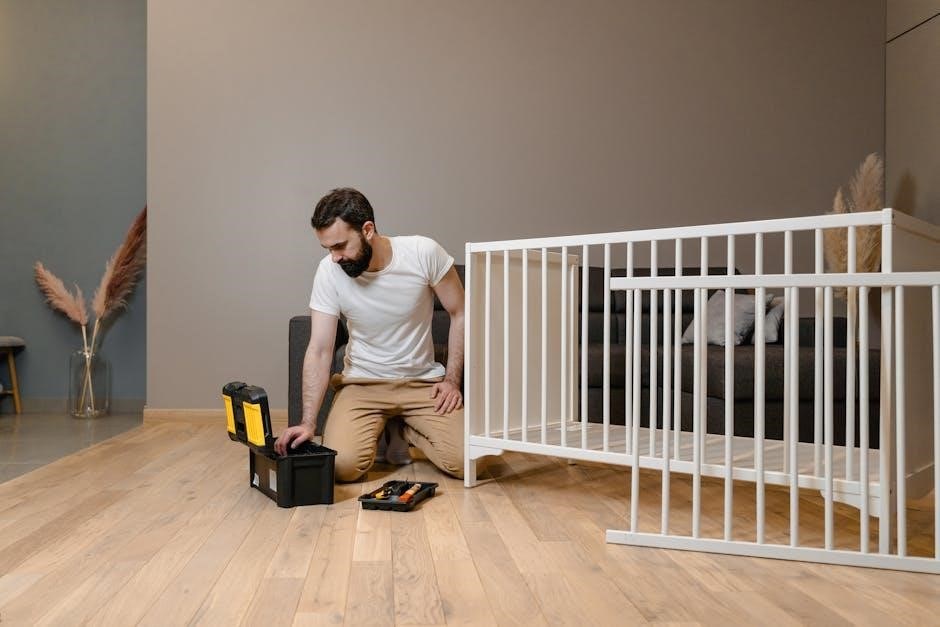
Troubleshooting Common Assembly Issues

Common problems include missing parts‚ difficulty with hardware‚ or unclear instructions; ensure all components are present and follow the manual closely for smooth assembly․

Missing Parts

Discovering missing components during Graco 4-in-1 crib assembly is a frustrating‚ yet relatively common‚ issue․ First‚ meticulously re-check all packaging materials – sometimes smaller hardware items are concealed within the cardboard or taped to larger pieces․ Carefully compare the physical parts against the detailed parts list included in the assembly manual; this list is crucial for identifying exactly what’s absent․

If a part is genuinely missing‚ do not attempt to substitute with non-Graco hardware‚ as this could compromise the crib’s structural integrity and safety․ Contact Graco customer support directly; they typically offer replacement parts free of charge‚ often requiring only the crib model number and a description of the missing item․ Be prepared to provide proof of purchase‚ such as a receipt or order confirmation․ Allow several business days for shipping and delivery of the replacement part before resuming assembly․

Difficulty with Hardware

Encountering issues with the Graco crib hardware is frequent during assembly․ Often‚ the problem isn’t a missing piece‚ but difficulty correctly identifying or utilizing the provided screws‚ bolts‚ and dowels․ The assembly manual’s diagrams are key; carefully study them to ensure you’re using the correct hardware for each step․ Some users report screws being difficult to tighten fully‚ requiring firm‚ even pressure with the appropriate tool;

Avoid over-tightening‚ as this can strip the screw holes or damage the wood․ If a screw feels stuck‚ try reversing it slightly before re-attempting to tighten․ If you’re struggling‚ double-check the alignment of the connecting pieces․ If hardware continues to be problematic‚ contact Graco customer support; they can offer guidance or send replacements if a piece is defective․

Unclear Instructions

Many users report that the Graco 4-in-1 crib assembly instructions‚ while generally adequate‚ can sometimes be unclear or lack sufficient detail․ Diagrams‚ while present‚ may not always clearly illustrate the orientation of parts or the precise sequence of steps․ This can lead to confusion‚ particularly for first-time parents assembling a crib․ Online resources‚ such as video tutorials created by other customers‚ can be invaluable in supplementing the printed manual․

Carefully reviewing the instructions before beginning assembly is crucial․ Pay close attention to the hardware identification section․ If a step remains unclear‚ try searching online forums or contacting Graco customer support for clarification․ Taking your time and double-checking each connection will minimize errors and frustration․

brother p touch label maker instructions

Brother P-Touch label makers offer versatile solutions for organization, utilizing genuine cartridges and user-friendly software like iPrint&Scan.

These devices streamline labeling tasks, from home projects to professional filing, with diverse tape options and convenient mobile app integration.

What is a Brother P-Touch Label Maker?

Brother P-Touch label makers are compact, portable devices designed for creating customized labels. They utilize thermal transfer technology, meaning no ink is required – the image is created by heat on the tape.

These machines accept specialized Brother tape cartridges containing both the ribbon and the label material; They’re ideal for home, office, and various organizational needs, offering features like font selection, symbol integration, and template options, often controllable via a dedicated app like iPrint&Scan.

Popular Brother P-Touch Models

Several Brother P-Touch models cater to diverse needs. The PT-300 is a basic, cost-effective option, while the P-Touch Cube Plus offers smartphone connectivity via the iPrint&Scan app.

For higher volume and advanced features, models like the PT-P710BT provide Bluetooth connectivity and wider tape compatibility. Other popular choices include the PT-2730 and various handheld options, each with varying capabilities and price points.

Getting Started: Basic Operations

Brother P-Touch setup involves installing batteries, loading a compatible tape cartridge, and powering on the device for immediate labeling convenience.

Installing the Batteries

To install batteries in your Brother P-Touch, locate the battery compartment, typically on the back or bottom of the device. Open the compartment cover and insert the required number of batteries – usually AAA or AA – ensuring correct polarity (+ and -) as indicated inside.

Securely close the battery cover. Low battery indicators will alert you when replacement is needed, ensuring uninterrupted labeling. Always handle batteries safely and dispose of them properly.

Loading the Label Tape

Loading label tape is straightforward. Open the label compartment, usually by lifting a cover. Insert the Brother tape cartridge with the label side facing up, ensuring it clicks into place.

Feed the tape through the guides and rollers, following the diagram inside the compartment. Proper loading ensures smooth printing and prevents tape jams. Use genuine Brother cartridges for optimal performance.

Powering On and Off

Powering on your Brother P-Touch is typically done with a dedicated power button, often clearly marked. Press and hold this button briefly to activate the device. To power off, repeat the process – a short press and hold of the power button.

Some models may have an auto-power off feature to conserve battery life when inactive for a period.

Understanding the Control Panel

Brother P-Touch control panels feature keys for text entry, menu navigation, and print settings adjustments. Symbols indicate functions, enabling efficient label customization.

Key Functions and Symbols

Brother P-Touch control panels utilize distinct keys for essential operations. The ‘Print’ button initiates label creation, while arrow keys navigate menus and edit text. ‘Backspace’ corrects errors, and ‘Shift’ accesses alternate characters. Symbols represent functions like font size, style, and border options.

Understanding these icons—often depicting underlining, bolding, or frame styles—is crucial for customizing labels. The ‘Cut’ button cleanly separates printed labels, ensuring professional results. Refer to your model’s manual for specific symbol definitions.

Navigating the Menu

Brother P-Touch menu navigation typically employs arrow keys – up, down, left, and right – to scroll through options. The ‘OK’ or ‘Enter’ button confirms selections. Use ‘Cancel’ or ‘Escape’ to return to previous screens.

Menus organize settings like font, style, tape width, and template choices. Explore submenus for advanced customization. Wireless models feature network setup within the menu system, enabling connectivity via iPrint&Scan. Consult your user manual for a detailed menu map.

Adjusting Print Settings

Brother P-Touch allows customization of print settings via the control panel. Adjust font size and style for readability. Select desired print speed and repetition for multiple labels. Modify the length of each label to fit your needs.

Explore options for underlining, bolding, and italics. Utilize the preview function to visualize the final output before printing. Access these settings through the menu, ensuring optimal label clarity and appearance.

Creating Your First Label

Begin by entering text and numbers using the keypad. Select a font size and style, then choose a pre-designed label template for quick formatting.

Entering Text and Numbers

Utilize the on-screen keyboard to input your desired text directly into the Brother P-Touch label maker. Navigate through letters, numbers, and symbols using the control panel’s directional keys.

Confirm each character before proceeding. The device allows for a specific character limit per label, displayed on the screen. Remember to double-check your input for accuracy, as errors require re-entry.

Consider using the preview function to visualize the final label before printing, ensuring correct spelling and formatting.

Selecting Font Size and Style

Access the font options through the label maker’s menu system, typically navigated using the control panel buttons. Brother P-Touch devices offer a range of pre-installed fonts, allowing customization of label appearance.

Adjust font size to fit the label width and ensure readability. Preview the selected font and size before printing to confirm suitability. Explore different styles – bold, italic, underline – to emphasize key information.

Experiment to find the optimal combination for clarity and visual appeal.

Choosing a Label Template

Brother P-Touch label makers include pre-designed templates for common applications, streamlining the labeling process. Access these templates via the device’s menu, categorized by use – address, file folders, or barcodes.

Templates provide pre-formatted layouts, saving time and ensuring consistency. Select a template that closely matches your needs, then customize the text and details.

Utilize templates for quick, professional-looking labels, or create custom designs for unique applications.

Advanced Features & Customization

Brother P-Touch allows for enhanced label creation, including built-in symbols, custom templates, and decorative elements like borders and frames for personalization.

Using Built-in Symbols

Brother P-Touch label makers boast a comprehensive library of pre-designed symbols accessible directly through the control panel. These symbols enhance label clarity and visual appeal, representing various categories like office supplies, warning signs, or organizational icons.

Navigating the symbol menu is straightforward, allowing users to quickly insert relevant icons into their labels. This feature eliminates the need for manual drawing, saving time and ensuring professional-looking results. Explore the options to find the perfect symbol for every labeling need!

Creating Custom Templates

Brother P-Touch label makers empower users to design personalized templates for frequently used labels. Utilizing the P-Touch Editor software (PC/Mac) or the iPrint&Scan app, you can save custom layouts with specific fonts, sizes, and symbol placements.

This feature streamlines repetitive tasks, ensuring consistency across all your labels. Save time and effort by creating templates for address labels, file folders, or any other labeling requirement, readily available for future use.

Adding Borders and Frames

Brother P-Touch label makers enhance label aesthetics with built-in border and frame options. Through the P-Touch Editor software or iPrint&Scan app, users can easily select from various styles to surround their text.

These decorative elements add visual appeal and help labels stand out. Customize borders with different thicknesses and patterns, creating professional-looking labels for diverse applications, from gift tags to organizational purposes.

Connectivity and Software

Brother offers iPrint&Scan for iOS/Android and P-Touch Editor for PC/Mac, enabling label creation without a direct device connection. Wireless models simplify setup.

Brother iPrint&Scan App (iOS & Android)

Brother iPrint&Scan empowers users to directly utilize their P-Touch label maker’s features from a smartphone or tablet, eliminating the need for a computer connection. Available on both Apple iOS and Android devices, this application facilitates seamless label design and printing.

Download the app from respective app stores to access a range of functionalities, streamlining label creation on the go and enhancing overall convenience.

Brother P-Touch Editor Software (PC/Mac)

Brother P-Touch Editor software provides comprehensive label design capabilities for both PC and Mac users. This software unlocks advanced features, allowing for intricate label customization beyond the basic functions of the device itself.

Users can download the software from the Brother website to access printing, scanning, and workflow functionalities, creating professional-quality labels with ease and precision.

Wireless Connection Setup

Wireless connection allows label creation directly from smartphones or computers without a physical cable. For setup, navigate to the machine’s settings and select your Wi-Fi network.

Ensure your label maker is within range of the router. Utilize the Brother iPrint&Scan app for streamlined connectivity and label design, offering convenient wireless printing options for enhanced productivity.

Troubleshooting Common Issues

Tape jams, faded prints, or connectivity problems are easily addressed by checking tape installation, battery levels, and network settings.

Refer to the user manual for detailed solutions and error code explanations.

Tape Jams and Errors

Tape jams frequently occur due to improper tape loading or debris within the mechanism. Gently remove the tape cassette and reinsert it, ensuring it clicks into place;

If errors persist, carefully inspect the tape path for any obstructions. Utilize the manual cutter to trim any tangled tape.

Consult the user manual for specific error codes displayed on your Brother P-Touch, as these indicate the nature of the problem and suggest solutions.

Printing is Faded or Incorrect

Faded prints often indicate low battery power; replace batteries immediately. Ensure you’re using genuine Brother tape cartridges, as non-genuine tapes can yield poor results.

Incorrect printing may stem from improper print settings within the device or the iPrint&Scan app.

Verify font size, style, and darkness settings. Clean the print head gently with a dry cloth to remove any accumulated residue for optimal clarity.

Connectivity Problems

If experiencing wireless connection issues, confirm your Brother P-Touch is within range of your Wi-Fi network. Restart both the label maker and your router.

Ensure the correct network password is entered during setup via the Brother iPrint&Scan app.

Check for firmware updates on the Brother website, as these often include connectivity improvements. Temporarily disable firewalls or security software that might be interfering with the connection.

Maintenance and Care

Brother P-Touch label makers require regular cleaning of the tape cutter and occasional blade replacement for optimal performance and longevity.

Proper storage protects the device.

Cleaning the Tape Cutter

To maintain your Brother P-Touch, regularly clean the tape cutter. Accumulated adhesive residue can hinder smooth operation. Gently remove any visible debris using a dry, soft cloth.

Avoid using solvents or abrasive cleaners, as these can damage the cutter mechanism. For stubborn residue, lightly dampen the cloth with water, ensuring it’s not overly wet.

A clean cutter ensures precise label separation and extends the life of your label maker.

Replacing the Cutter Blade

When labels aren’t cleanly cut, the cutter blade may need replacing. Access the blade compartment, typically located near the tape cutter. Carefully remove the old blade, noting its orientation for correct installation.

Insert the new blade, ensuring it clicks securely into place. Avoid touching the blade’s cutting edge to prevent injury.

A sharp blade guarantees clean label separation and optimal P-Touch performance.

Storing Your Label Maker

To prolong the life of your Brother P-Touch, store it in a cool, dry place, away from direct sunlight and extreme temperatures. Remove the batteries if the device will be unused for an extended period to prevent corrosion.

Protect the cutter blade during storage; consider covering it with a protective cap if available.

Proper storage ensures your label maker remains in optimal working condition.

Genuine Brother Tape Cartridges

Brother recommends using genuine tape cartridges for optimal performance and reliability. They ensure consistent print quality and compatibility with your P-Touch.

Types of Tape Available

Brother P-Touch label makers support a wide array of tape types, catering to diverse needs. Options include laminated tapes for durability, non-laminated for cost-effectiveness, and specialized tapes like strong adhesive or extra-durable varieties.

Furthermore, you can find tapes with different widths, colors (including clear and metallic), and even pre-printed designs. The split-peel backing facilitates easy application, while choices extend to fabric tapes for crafting projects.

Benefits of Using Genuine Cartridges

Brother strongly recommends utilizing genuine P-Touch cartridges for optimal performance and longevity. These cartridges are engineered to work seamlessly with your label maker, ensuring consistent print quality and preventing potential damage to the device’s internal mechanisms.

Genuine tapes deliver superior adhesion and durability, resisting fading and peeling. Using non-genuine tapes may void your warranty and compromise the overall labeling results.

Compatibility with Different Models

Brother P-Touch label makers boast a wide range of compatible tape cartridges, though specific options vary by model. Always consult your device’s user manual or the Brother website to confirm the correct tape type for your machine.

Certain models support laminated tapes, while others are designed for standard options. Utilizing the recommended cartridges ensures optimal adhesion and print quality across all P-Touch devices.

Label Applications & Ideas

Brother P-Touch label makers excel at home organization, office filing, and cable identification, offering practical solutions for diverse labeling needs with customized templates.

Home Organization Labels

Brother P-Touch label makers are ideal for decluttering and organizing your home! Create clear, durable labels for pantry items, storage bins, and kids’ toys, enhancing accessibility and visual appeal.

Utilize various fonts and symbols to categorize belongings effectively. Label maker tapes resist fading, ensuring long-lasting organization. From kitchen containers to linen closets, achieve a tidy and efficient living space with customized labels.

Office and Filing Labels

Brother P-Touch label makers significantly improve office efficiency! Create professional-looking labels for files, folders, binders, and shelves, streamlining document management and retrieval.

Clearly identify contents for quick access, boosting productivity. Utilize templates and various font sizes for a consistent, organized appearance. Durable labels withstand frequent handling, ensuring long-term clarity in busy office environments. Enhance your workspace with professional labeling!

Cable and Wire Identification

Brother P-Touch labelers are ideal for organizing complex cabling systems. Clearly label network cables, power cords, and wires during installation or troubleshooting, preventing confusion and saving time.

Use durable, laminated tapes to withstand harsh environments and abrasion. Accurate identification simplifies maintenance and upgrades. Avoid disconnecting the wrong cable – a properly labeled system ensures efficient and reliable connectivity for all your devices!

Safety Precautions

Handle batteries with care, avoiding damage to the device. Properly dispose of used tapes and cartridges, following local regulations for environmental safety.

Handling Batteries Safely

Always insert batteries with correct polarity, as indicated. Avoid mixing old and new batteries, or different battery types. Remove batteries if the device will not be used for an extended period to prevent leakage and corrosion. Keep batteries away from heat and direct sunlight. Dispose of used batteries responsibly, following local environmental regulations for battery recycling or proper disposal – do not simply discard them with regular trash.

Avoiding Damage to the Device

Protect your Brother P-Touch from liquids and excessive force. Do not attempt to disassemble or repair the device yourself; contact authorized service personnel for assistance. Avoid dropping the label maker, as this can damage internal components. Ensure the tape cutter blade is handled with care to prevent injury and maintain functionality. Keep the device clean and free from dust and debris.

Proper Disposal of Used Tapes

Dispose of used Brother P-Touch tape cartridges responsibly, following local regulations for plastic waste. Do not discard tapes with hazardous materials. Consider recycling options if available in your area. Empty the cassette completely before disposal. Avoid littering with used tapes. Check your community guidelines for proper plastic recycling procedures, ensuring environmental protection and responsible waste management.

Downloading User Manuals

Access comprehensive Brother P-Touch manuals directly from the official Brother website, offering detailed instructions and support resources for your specific model.

Finding Manuals on the Brother Website

To locate your Brother P-Touch label maker’s manual, navigate to the official Brother support website. Utilize the search bar, entering your model number for precise results.

Alternatively, browse by product category – selecting “Label Printers” – and then filtering by your specific P-Touch model. Downloadable PDFs are readily available, providing detailed operational guidance, troubleshooting tips, and safety precautions for optimal use.

Accessing Online Support Resources

Brother provides extensive online support for P-Touch label makers. Explore their support website for FAQs, troubleshooting guides, and video tutorials addressing common issues.

The Brother support community forums offer peer-to-peer assistance and solutions. Additionally, iPrint&Scan app support and software downloads are available, ensuring you have the resources needed for seamless label creation and device operation.

Warranty Information

Brother P-Touch label makers come with a limited warranty covering defects in materials and workmanship. Product registration enhances warranty benefits and support access.

Brother P-Touch Label Maker Warranty Details

Brother offers a one-year limited warranty on P-Touch label makers from the date of original purchase. This warranty covers defects in materials and workmanship under normal use. It does not cover issues arising from misuse, accidents, or unauthorized repairs.

The warranty includes repair or replacement at Brother’s discretion. To obtain warranty service, proof of purchase is required. Extended warranties may be available for purchase separately, providing additional coverage and peace of mind.

Registering Your Product

Registering your Brother P-Touch label maker online is highly recommended. This allows Brother to provide you with important product updates, promotional offers, and faster warranty service if needed. Registration typically requires your model number and serial number, found on the device itself.

Visit the official Brother website to locate the product registration page and complete the simple online form. It’s a quick process that enhances your ownership experience.

kenmore elite clothes dryer manual

Kenmore Elite Clothes Dryer Manual: A Comprehensive Guide

Kenmore Elite dryer manuals are essential for optimal performance and longevity; this guide provides detailed instructions, troubleshooting, and safety information for your appliance.

Understanding Your Kenmore Elite Dryer

Kenmore Elite dryers represent a blend of advanced technology and reliable performance, designed to simplify your laundry routine. Familiarizing yourself with its features, cycles, and operational nuances is key to maximizing its efficiency and lifespan. This manual serves as a comprehensive resource, detailing everything from locating the model number – typically found around the dryer door opening – to understanding specialized functions like steam or sanitize cycles.

Locating the Model Number

Finding your Kenmore Elite dryer’s model number is the first step towards accessing specific support and replacement parts. Typically, this crucial identifier is located on a sticker around the dryer door opening. Carefully inspect the perimeter of the door – look for it on the bottom left, right, or top right side; Having this number readily available streamlines troubleshooting and ensures you order the correct components when needed.

Where to Find the Model Number Sticker

On most Kenmore Elite dryers, the model number sticker resides within the dryer door’s opening. Begin by opening the dryer door and thoroughly examine the surrounding frame. The sticker is often positioned on the lower left or right side of the opening, or alternatively, along the upper right side. If you’re still unable to locate it, consult your owner’s manual for specific guidance related to your model.

Decoding the Model Number

The Kenmore dryer model number is a unique identifier crucial for accessing specific parts and maintenance details. It details the appliance’s exact specifications. Understanding this code allows for accurate troubleshooting and ensures compatibility when ordering replacement components. This number unlocks access to tailored manuals and support resources, guaranteeing optimal performance and extending the dryer’s lifespan. It’s your key to efficient appliance care.

Understanding the Format of Kenmore Model Numbers

Kenmore model numbers, like those for Elite dryers, typically consist of a series of digits and sometimes letters. These aren’t random; they encode information about the appliance’s manufacturing date, features, and specific configuration. While the exact format varies, each segment contributes to identifying the precise model. Decoding this structure helps pinpoint compatible parts and access relevant documentation, ensuring accurate repairs and maintenance for your dryer.

Safety Precautions

Prioritize safety when operating your Kenmore Elite dryer. Always ensure proper ventilation and avoid drying flammable materials. Regularly inspect the exhaust duct for blockages to prevent fire hazards. Gas dryers require extra caution due to potential carbon monoxide risks; ensure proper gas connection and ventilation. Disconnect power before any maintenance. Keep children and pets away during operation, and heed all warning labels.

General Dryer Safety Guidelines

To ensure safe operation, never operate a damaged dryer. Regularly clean the lint filter before each use to prevent fires. Avoid overloading the dryer, and do not dry items that have been exposed to flammable substances like gasoline or cleaning solvents. Always disconnect the dryer from power before cleaning or servicing. Keep the surrounding area clear of combustible materials.

Carbon Monoxide Poisoning Risk (Gas Dryers)

Gas dryers produce carbon monoxide (CO), an odorless, colorless gas. Ensure proper ventilation to prevent CO buildup. Install a CO detector near the dryer. Symptoms of CO poisoning include headache, dizziness, nausea, and confusion. If you suspect CO poisoning, immediately evacuate and call emergency services. Never operate a gas dryer in a confined space or without proper exhaust venting.

Dryer Components Overview

Kenmore Elite dryers consist of several key components. The drum and baffles tumble clothes for even drying. A heating element (electric) or gas burner provides heat. The control panel and display allow cycle selection and monitoring. Additional parts include the motor, belts, thermostats, and exhaust system. Understanding these components aids in maintenance and troubleshooting potential issues with your appliance.

Drum and Baffles

The drum within your Kenmore Elite dryer is responsible for rotating clothes during the drying cycle. Baffles, typically plastic fins, lift and tumble the laundry, ensuring even exposure to heat. Regularly inspect the drum’s interior for any obstructions or damage. Proper drum rotation and baffle function are crucial for efficient drying and preventing uneven results, contributing to garment care.

Heating Element/Gas Burner

Kenmore Elite dryers utilize either an electric heating element or a gas burner to generate heat. The heating element converts electricity into heat, while the gas burner combusts gas. A malfunctioning component results in no heat or insufficient drying. Regular inspection is vital; gas burners require professional servicing. Ensure proper ventilation for gas models, and never attempt repairs without disconnecting power/gas.

Control Panel and Display

The Kenmore Elite dryer’s control panel houses buttons and a digital display for cycle selection, temperature adjustments, and feature activation. The display shows cycle progress, remaining time, and error codes. Familiarize yourself with each button’s function. A responsive control panel ensures accurate settings. If the display malfunctions, consult the troubleshooting section or contact Kenmore customer support for assistance.

Operating Instructions

To operate your Kenmore Elite dryer, begin by loading clothes, ensuring the lint filter is clean. Select the appropriate dryer cycle – delicate, normal, heavy-duty, etc. – using the control panel. Adjust temperature settings based on fabric type. Utilize special features like steam or sanitize as needed. Always adhere to garment care labels for optimal results and to prevent damage.

Selecting Dryer Cycles

Kenmore Elite dryers offer diverse cycles for varied needs. “Delicate” is ideal for lingerie and fragile items, while “Normal” suits everyday laundry. “Heavy Duty” tackles towels and jeans. “Permanent Press” minimizes wrinkles. Explore cycles like “Steam Refresh” or “Sanitize” for specialized care. Always consult garment labels; incorrect cycle selection can cause shrinking or damage. Proper cycle choice ensures optimal drying and fabric preservation.

Adjusting Temperature Settings

Kenmore Elite dryers provide adjustable temperature settings for fabric protection. “High” heat is suitable for durable cottons, while “Medium” works well for synthetics. “Low” or “Delicate” is best for sensitive items; “Air Dry” offers no heat, ideal for fluffing or delicate materials. Always check garment care labels before selecting a temperature. Incorrect heat levels can cause shrinking, damage, or fading. Prioritize fabric safety with appropriate temperature choices.

Using Special Features (Steam, Sanitize, etc.)

Kenmore Elite dryers often include features like Steam Refresh to reduce wrinkles and Sanitize to eliminate bacteria. The Steam cycle gently refreshes clothes, while Sanitize uses high heat for thorough disinfection. Some models offer a Wrinkle Shield option, tumbling clothes periodically after the cycle ends. Consult your specific model’s manual for detailed instructions on utilizing these features effectively and safely, maximizing their benefits.

Maintenance and Cleaning

Regular Kenmore Elite dryer maintenance ensures optimal performance and longevity. Crucially, clean the lint filter after every load to maintain airflow and prevent fire hazards. Periodically clean the lint duct to remove accumulated debris. Wipe down the dryer’s interior and exterior with a damp cloth. Following these simple steps will keep your dryer running efficiently and safely, extending its lifespan and preventing potential issues.

Cleaning the Lint Filter

Kenmore Elite dryer lint filters require cleaning after each load to maintain optimal airflow. Locate the filter, typically inside the dryer door or on top of the drum. Remove the filter and gently remove the lint by hand or with a soft brush. Ensure the filter is completely clean and dry before reinstalling. A clogged filter reduces efficiency and poses a fire risk, so consistent cleaning is vital.

Cleaning the Lint Duct

Periodically cleaning the Kenmore Elite dryer’s lint duct is crucial for safety and efficiency. Disconnect the dryer from power. Locate the duct – usually a flexible hose behind the appliance. Detach it and use a long, flexible brush or vacuum attachment to remove accumulated lint. Inspect the duct for damage and replace if necessary. A clear duct prevents fire hazards and optimizes drying performance, ensuring your dryer operates safely.

Cleaning the Dryer Interior and Exterior

Regularly cleaning your Kenmore Elite dryer’s interior and exterior maintains its appearance and functionality. Wipe down the exterior with a damp cloth and mild detergent. For the interior drum, use a similar solution, avoiding abrasive cleaners. Pay attention to the door seal, removing any lint or debris. A clean dryer ensures optimal performance and prevents the transfer of dirt or residue to your clothes, keeping them fresh.

Troubleshooting Common Issues

Kenmore Elite dryers can occasionally experience issues. If the dryer won’t start, check the power supply and door latch. For no heat, inspect the heating element or gas supply. Unusual noises often indicate foreign objects or worn components. Before attempting repairs, disconnect power. Consulting the manual or a qualified technician is recommended for complex problems, ensuring safe and effective resolution of any dryer malfunction.

Dryer Not Starting

If your Kenmore Elite dryer fails to start, first verify the power cord is securely plugged into a working outlet. Check the circuit breaker or fuse box for tripped breakers or blown fuses. Ensure the door is fully closed and latched; a faulty latch switch prevents operation. A jammed start button or a control panel issue could also be the cause, requiring professional diagnosis.

Dryer Not Heating

A Kenmore Elite dryer not heating often indicates a problem with the heating element (electric models) or gas burner assembly (gas models). Inspect the thermal fuse and high-limit thermostat – these safety components frequently fail. A malfunctioning gas valve or igniter could be the issue for gas dryers. Always disconnect power before inspecting internal components; professional repair is recommended for gas dryer heating issues.

Dryer Making Unusual Noises

Unusual noises from your Kenmore Elite dryer can signal several issues. Squealing often points to worn drum support rollers or a worn belt. Grinding sounds may indicate a problem with the motor or blower wheel. Clicking noises could stem from objects lodged in the drum or lint duct. Regularly inspect and clean these areas; if noises persist, professional service is advised.

Error Codes and Their Meanings

Kenmore Elite dryers utilize error codes to diagnose internal problems. These codes, displayed on the control panel, pinpoint specific malfunctions. Common codes include “E1” (temperature sensor failure) or “E2” (heating element issue). Refer to your dryer’s manual for a complete list and corresponding solutions. Ignoring error codes can lead to further damage; prompt attention is crucial for efficient operation.

Interpreting Dryer Error Codes

Kenmore Elite dryer error codes are the appliance’s way of communicating issues. Begin by noting the exact code displayed. Consult your owner’s manual – it contains a dedicated section listing each code and its meaning. Some codes require simple fixes, like cleaning the lint trap, while others indicate more serious component failures needing professional repair. Always disconnect power before attempting any troubleshooting.

Replacing Parts

Kenmore Elite dryer parts replacement often becomes necessary for continued operation. First, accurately identify the faulty component using troubleshooting steps. Always disconnect the dryer from power and gas (if applicable) before starting. Ensure the replacement part is compatible with your specific model number. Detailed repair guides and videos are available online to assist with the process, prioritizing safety throughout.

Identifying Compatible Replacement Parts

Precisely matching replacement parts to your Kenmore Elite dryer’s model number is crucial. Utilize the model number when searching online parts retailers or contacting Kenmore customer support. Cross-reference part numbers to confirm compatibility, avoiding generic alternatives. Websites often feature parts diagrams specific to your dryer, simplifying identification. Incorrect parts can cause malfunctions or safety hazards, so double-check before purchasing.

Ordering Replacement Parts

Several avenues exist for procuring Kenmore dryer parts. Official Kenmore’s website and authorized retailers are reliable sources, ensuring genuine components. Third-party appliance parts websites offer broader selections, often at competitive prices. Always verify the seller’s reputation and return policy. Have your dryer’s model number ready during the ordering process to guarantee compatibility. Shipping costs and delivery times vary, so compare options before finalizing your purchase.

Where to Purchase Kenmore Dryer Parts

Kenmore dryer parts are readily available through several channels. The official Kenmore website is a primary source for genuine components. Major retailers like Sears (historically linked to Kenmore) and Lowe’s often stock common parts. Online appliance parts retailers, such as AppliancePartsPros and RepairClinic, provide extensive catalogs. Local appliance repair shops may also sell parts directly to consumers. Comparing prices and shipping costs across these options is advisable.

Wiring Diagrams (If Available)

Kenmore Elite dryer wiring diagrams are crucial for advanced repairs involving electrical components. These schematics illustrate the connections between the control board, heating element, motor, and other parts. Accessing these diagrams often requires the specific model number. They may be included in the service manual, available online through appliance repair forums, or obtainable from Kenmore customer support. Caution: Electrical work should only be performed by qualified individuals.

Understanding Dryer Wiring Schematics

Kenmore Elite dryer wiring schematics utilize standardized symbols to represent components like switches, relays, and motors. Color-coded wires indicate voltage and function. Tracing circuits requires understanding series and parallel connections. A multimeter is essential for verifying continuity and voltage. Always disconnect power before working with wiring. Diagrams often show voltage readings at various points, aiding in troubleshooting electrical faults. Proper interpretation ensures safe and effective repairs.

Gas Dryer Specifics

Kenmore Elite gas dryers require a dedicated gas supply line and proper ventilation. Gas connection must be performed by a qualified technician to prevent leaks and ensure safety. Regularly inspect the gas line for damage. The burner assembly needs periodic cleaning for efficient operation. Always follow safety precautions regarding carbon monoxide poisoning. Proper airflow is crucial for combustion and moisture removal.

Gas Connection and Safety

Kenmore Elite gas dryers demand professional installation of the gas line, adhering to local codes. A qualified technician should perform this crucial step, verifying a secure connection and leak-free operation. Never attempt self-installation. Regularly inspect the gas line for any signs of damage or wear. Prioritize carbon monoxide detection, ensuring proper ventilation to prevent buildup. Safety is paramount when dealing with gas appliances.

Electric Dryer Specifics

Kenmore Elite electric dryers require a dedicated 240-volt electrical circuit, typically utilizing a NEMA 14-30 receptacle. Confirm your home’s electrical system meets these requirements before installation. Never use extension cords or adapters, as they pose a fire hazard. A qualified electrician should handle all wiring connections, ensuring proper grounding for safety. Regularly check the power cord for damage, and avoid overloading the circuit.

Electrical Requirements and Safety

Kenmore Elite electric dryers demand a dedicated 240V, 30-amp circuit with a NEMA 14-30 plug. Improper wiring can cause fire or electric shock; professional installation is crucial. Always disconnect power before servicing. Never ground to plumbing pipes. Inspect the power cord regularly for damage, replacing it if frayed. Avoid using extension cords. Ensure the dryer is properly grounded to prevent electrical hazards and maintain safe operation.

Energy Saving Tips

Maximize efficiency with your Kenmore Elite dryer! Clean the lint filter after every load to improve airflow. Utilize moisture sensors for optimal drying times, preventing over-drying. Dry similar fabrics together. Consider air-drying delicate items. Avoid overloading the dryer; smaller loads dry faster. Schedule drying during off-peak energy hours if possible, reducing costs and conserving energy.

Optimizing Dryer Usage for Efficiency

To enhance your Kenmore Elite dryer’s efficiency, consistently remove lint after each cycle – a clogged filter drastically increases energy consumption. Employ moisture sensors instead of timed drying. Ensure proper ventilation; a blocked vent restricts airflow. Avoid excessive heat for delicate fabrics. Fully load the dryer, but don’t overcrowd it, for optimal performance and reduced runtimes.

Warranty Information

Your Kenmore Elite dryer is covered by a manufacturer’s warranty protecting against defects in materials and workmanship. The standard warranty typically lasts for one year from the purchase date, covering parts and labor. Extended warranties are often available for purchase, offering longer-term protection. Retain your proof of purchase for warranty claims; review the full warranty details in your owner’s manual;

Understanding Your Kenmore Elite Dryer Warranty

The Kenmore Elite dryer warranty generally covers defects in manufacturing and materials for a specified period, typically one year. This includes parts and labor for repairs. However, the warranty doesn’t cover damage from misuse, accidents, or improper installation. Carefully review the warranty documentation for exclusions and claim procedures. Registering your appliance can streamline the warranty process.

Customer Support and Contact Information

Kenmore customer service offers various resources for assistance with your Elite dryer. You can find helpful FAQs and troubleshooting guides online. For direct support, visit the Kenmore website or call their dedicated helpline. Be prepared to provide your model number for efficient service. Online chat support may also be available for quick resolutions to common issues.

Kenmore Customer Service Resources

Kenmore provides extensive online support, including a comprehensive FAQ section and downloadable manuals for various Elite dryer models. Their website features troubleshooting guides and parts diagrams. Direct contact options include a dedicated customer service phone line and online chat support. Registering your appliance unlocks additional resources and warranty information, ensuring a seamless support experience.

Frequently Asked Questions (FAQ)

Common questions involve locating the model number – typically found inside the dryer door opening – and understanding error codes. Users often inquire about lint filter cleaning frequency and proper venting procedures. Troubleshooting common issues like dryers not starting or heating are frequent requests. Kenmore’s support resources address these concerns, offering detailed guidance for optimal dryer performance and maintenance.

Common Questions About Kenmore Elite Dryers

Frequently asked questions center around identifying the correct model number for parts ordering and manual access. Users often seek clarification on cycle selections for specific fabrics and stain removal. Concerns about unusual noises, heating issues, and error code interpretations are common. Kenmore owners also inquire about energy-saving features and proper dryer maintenance schedules for extended appliance life.

zen bones zen flesh pdf

Zen Bones‚ Zen Flesh: A Comprehensive Guide to the PDF & Its Significance

Today‚ April 8th‚ 2026‚ at 01:25:49‚ accessing the “Zen Bones‚ Zen Flesh” PDF unlocks a profound journey into Zen Buddhism‚ offering a concentrated spiritual experience.

What is “Zen Bones‚ Zen Flesh”?

“Zen Bones‚ Zen Flesh‚” compiled by Paul Reps‚ is a cornerstone text for understanding Zen Buddhism‚ particularly for Western audiences. It’s not a systematic philosophical treatise‚ but rather a curated collection of stories‚ anecdotes‚ poems‚ and koans – paradoxical riddles designed to challenge conventional thinking.

The book skillfully blends Chinese and Japanese Zen teachings‚ presenting them in a highly accessible and engaging manner. It aims to convey the essence of Zen‚ moving beyond intellectual understanding to direct experiential realization. The PDF format allows for convenient study and reflection on these timeless teachings.

Rep’s compilation‚ published in 1957‚ quickly became influential‚ offering a unique entry point into a tradition often perceived as mysterious or impenetrable. The digital PDF version ensures continued accessibility for generations seeking insight into Zen practice and philosophy‚ as of April 8th‚ 2026‚ at 01:25:49.

Historical Context & Authorship

“Zen Bones‚ Zen Flesh” emerged in the mid-20th century‚ a period of growing Western interest in Eastern philosophies. Compiled by Paul Reps‚ an American Zen practitioner‚ the book wasn’t authored in the traditional sense but meticulously assembled from various sources. Reps spent years gathering materials‚ translating and adapting them for a Western readership.

The book reflects the post-World War II cultural landscape‚ where individuals sought alternatives to mainstream ideologies. Reps’ work‚ published in 1957‚ played a crucial role in introducing Zen Buddhism to a wider audience. The PDF format‚ a later development‚ has broadened its reach exponentially‚ making it readily available as of April 8th‚ 2026‚ at 01:25:49.

While Reps is the compiler‚ the text draws heavily from the writings of Zen masters like D.T. Suzuki and others‚ representing centuries of Zen thought. The PDF’s accessibility ensures this historical compilation continues to inspire and inform.

The Core Teachings Within the Text

“Zen Bones‚ Zen Flesh”‚ accessible in PDF format as of April 8th‚ 2026‚ at 01:25:49‚ presents a diverse collection of Zen teachings. Central to the book are stories of Zen masters – anecdotes illustrating enlightenment experiences and the paradoxical nature of reality. These narratives aren’t meant for intellectual understanding‚ but for intuitive grasping.

The text emphasizes the importance of direct experience over conceptual knowledge. It introduces concepts like mushotoku (no-mind) and the practice of zazen (seated meditation) as pathways to liberation. Koans‚ paradoxical riddles‚ are presented as tools to break down habitual thought patterns and awaken insight.

The PDF compilation highlights the impermanence of all things and the interconnectedness of existence. It’s a practical guide‚ offering glimpses into a way of life centered on mindfulness‚ compassion‚ and the realization of one’s true nature. The book’s enduring appeal lies in its ability to convey profound wisdom in a relatable manner.

Understanding the PDF Format & Accessibility

As of April 8th‚ 2026‚ 01:25:49‚ the “Zen Bones‚ Zen Flesh” PDF provides convenient access to timeless teachings‚ fostering deeper spiritual exploration for all readers.

Where to Find Legitimate PDF Copies

On April 8th‚ 2026‚ at 01:25:49‚ locating authentic “Zen Bones‚ Zen Flesh” PDF versions requires careful navigation. While numerous sources exist online‚ ensuring legality and quality is paramount. Reputable online bookstores specializing in Buddhist literature often offer authorized digital copies. University libraries with extensive digital collections may also provide access to the text for research purposes.

Beware of websites offering free downloads from unofficial sources‚ as these may contain malware or incomplete/corrupted files. Checking for ISBN verification and publisher information can help confirm authenticity. Project Gutenberg‚ while a valuable resource‚ doesn’t currently host this specific title. Prioritizing legitimate sources safeguards your device and ensures you’re engaging with the complete and accurate teachings of this influential work. Consider supporting the publisher by purchasing directly from their website when possible.

Legality & Copyright Considerations

As of April 8th‚ 2026‚ at 01:25:49‚ understanding the legal landscape surrounding the “Zen Bones‚ Zen Flesh” PDF is crucial. The text remains under copyright protection‚ meaning unauthorized distribution constitutes infringement. Downloading or sharing copies from unofficial sources is illegal and unethical‚ potentially leading to legal repercussions.

Purchasing a legitimate PDF license grants you the right to personal use‚ but does not permit redistribution. Fair use exceptions may apply for academic research or critical commentary‚ but require proper attribution. Public domain status has not yet been achieved for this work. Supporting the copyright holders – the publisher and author’s estate – ensures continued accessibility and quality editions. Respecting intellectual property rights fosters a sustainable ecosystem for Buddhist literature and scholarship. Always verify the source’s licensing terms before accessing or sharing the PDF.

PDF Features & Navigation

Recorded on April 8th‚ 2026‚ at 01:25:49‚ the “Zen Bones‚ Zen Flesh” PDF typically offers several features enhancing the reading experience. Most versions are searchable‚ allowing quick access to specific koans‚ teachings‚ or authorial insights. Interactive elements‚ like clickable table of contents and internal hyperlinks‚ facilitate effortless navigation between sections.

Zoom functionality caters to individual preferences‚ while annotation tools enable highlighting and note-taking for deeper engagement. Some PDFs include embedded fonts ensuring consistent formatting across devices. Accessibility features‚ such as text-to-speech compatibility‚ may be present. However‚ functionality varies depending on the PDF creator and viewer. Utilizing a modern PDF reader (Adobe Acrobat‚ Preview‚ etc.) unlocks the full potential of the document. Remember to regularly update your reader for optimal performance and security.

Key Concepts Explored in “Zen Bones‚ Zen Flesh”

As of April 8th‚ 2026‚ at 01:25:49‚ the PDF delves into koans‚ mushotoku‚ and zazen—cornerstones of Zen practice‚ fostering enlightenment and mindful living.

Koans: The Heart of Zen Practice

Recorded on April 8th‚ 2026‚ at 01:25:49‚ the “Zen Bones‚ Zen Flesh” PDF prominently features koans – paradoxical anecdotes or questions central to Zen Buddhist training. These aren’t riddles meant for intellectual solving‚ but rather tools designed to exhaust the logical mind and trigger a breakthrough in understanding.

Within the PDF‚ you’ll encounter examples intended to disrupt habitual thought patterns. The aim isn’t to figure out the ‘answer’‚ but to bypass the rationalizing mind and experience reality directly. Koans‚ as presented‚ challenge conventional wisdom and force practitioners to confront the limitations of language and conceptual thought.

The PDF illustrates how engaging with koans cultivates intuition and a deeper‚ non-dualistic perception. They are presented not as problems to be solved‚ but as invitations to a different way of being‚ a way of experiencing the world beyond the confines of the intellect. This practice‚ as detailed in the text‚ is fundamental to Zen realization.

Mushotoku: The Principle of No-Mind

As of April 8th‚ 2026‚ at 01:25:49‚ the “Zen Bones‚ Zen Flesh” PDF elucidates Mushotoku‚ often translated as “no-mind” or “non-intentionality.” This isn’t a blank state of consciousness‚ but rather a state free from ego-driven desires‚ preconceived notions‚ and deliberate striving. The PDF emphasizes that it’s a crucial element in Zen practice.

The text explains that Mushotoku allows one to respond to situations spontaneously and authentically‚ without the interference of the thinking mind. It’s about acting from a place of pure awareness‚ unburdened by self-consciousness or the pursuit of personal gain. The PDF illustrates this through stories and examples.

Achieving Mushotoku‚ according to the PDF‚ isn’t a goal to be actively pursued‚ but a natural outcome of consistent Zen practice‚ particularly Zazen. It’s a state of being where actions arise effortlessly from a place of deep connection to the present moment. This principle‚ the PDF suggests‚ is key to liberation.

Zazen: The Practice of Sitting Meditation

Recorded on April 8th‚ 2026‚ at 01:25:49‚ the “Zen Bones‚ Zen Flesh” PDF dedicates significant space to Zazen – seated meditation – as the cornerstone of Zen practice. It’s presented not merely as a technique‚ but as a direct path to experiencing reality as it is‚ beyond conceptual thought. The PDF details the traditional posture‚ emphasizing a straight spine‚ relaxed shoulders‚ and a gently closed mouth.

The PDF clarifies that Zazen isn’t about achieving a specific state of mind‚ but about observing thoughts and sensations without judgment. It’s a practice of “just sitting‚” allowing everything to arise and pass away naturally. The text stresses the importance of consistent practice‚ even for short durations.

Through Zazen‚ the PDF explains‚ one cultivates mindfulness‚ concentration‚ and equanimity. It’s a process of stripping away the layers of conditioning that obscure our true nature‚ leading to a deeper understanding of self and the universe. The PDF positions Zazen as essential for realizing Mushotoku.

The Influence of D.T. Suzuki

As of April 8th‚ 2026‚ at 01:25:49‚ the “Zen Bones‚ Zen Flesh” PDF owes its Western accessibility to D.T; Suzuki’s pivotal role in translating and interpreting Zen Buddhism.

Suzuki’s Role in Popularizing Zen in the West

Recorded on April 8th‚ 2026‚ at 01:25:49‚ D.T. Suzuki stands as a monumental figure in introducing Zen Buddhism to a Western audience‚ and crucially‚ influencing the reception of works like the “Zen Bones‚ Zen Flesh” PDF. Before Suzuki’s extensive writings and lectures‚ Zen remained largely obscure in the West‚ perceived as an exotic and impenetrable philosophy.

He meticulously translated key texts‚ offering insightful commentary that bridged cultural gaps and made Zen principles accessible. His work wasn’t merely translation; it was a careful interpretation designed to convey the spirit of Zen‚ rather than a literal rendering. This approach resonated deeply with intellectuals and artists seeking alternatives to Western materialism.

Suzuki’s lectures at Columbia University‚ beginning in the 1950s‚ attracted a diverse following‚ including prominent figures in literature and the arts. This exposure helped to cultivate a receptive environment for Zen teachings‚ paving the way for the wider distribution and study of texts like “Zen Bones‚ Zen Flesh” in PDF format and beyond. He essentially created a foundation for understanding‚ allowing the PDF to become a valuable resource.

His Translation Philosophy & Impact

As of April 8th‚ 2026‚ at 01:25:49‚ D.T. Suzuki’s translation philosophy wasn’t rooted in strict linguistic equivalence‚ but in conveying the essence of Zen. He believed a literal translation often missed the subtle nuances and experiential core of the teachings‚ particularly when dealing with concepts like koans‚ central to texts like the “Zen Bones‚ Zen Flesh” PDF.

Suzuki prioritized readability and accessibility for a Western audience‚ sometimes employing interpretive liberties to clarify meaning. This approach‚ while debated by purists‚ proved remarkably effective in sparking interest and fostering understanding. His impact extended beyond simply making Zen texts available; he shaped how Zen was understood in the West.

The widespread availability of the “Zen Bones‚ Zen Flesh” PDF‚ and other translated works‚ directly reflects Suzuki’s legacy. He didn’t just translate words; he translated a worldview. This allowed individuals to engage with Zen principles independently‚ fostering a growing interest in meditation and mindfulness‚ and solidifying his place as a pivotal figure in Zen’s Western journey.

Practical Applications of the Teachings

Today‚ April 8th‚ 2026‚ at 01:25:49‚ the “Zen Bones‚ Zen Flesh” PDF inspires integrating Zen’s wisdom into daily routines‚ fostering mindfulness and inner peace.

Integrating Zen Principles into Daily Life

As of today‚ April 8th‚ 2026‚ at 01:25:49‚ the “Zen Bones‚ Zen Flesh” PDF serves as a practical guide for weaving Zen’s essence into the fabric of everyday existence. This isn’t about dramatic life changes‚ but subtle shifts in perspective.

Consider mindful consumption – truly savoring each bite of food‚ noticing the textures and flavors. Apply this awareness to simple tasks like washing dishes‚ feeling the warmth of the water and the smoothness of the porcelain. The PDF encourages observing thoughts without judgment‚ recognizing them as fleeting phenomena rather than absolute truths.

Cultivate a sense of “just doing” – approaching activities without striving for a specific outcome. Whether it’s work‚ exercise‚ or creative pursuits‚ focus on the process itself. This echoes the principle of mushotoku‚ or no-mind‚ highlighted within the text. Regularly revisiting the koans presented in the PDF can sharpen this mindful awareness‚ prompting deeper self-reflection and a more grounded presence in the present moment.

Zen and Mindfulness: A Modern Connection

Recorded today‚ April 8th‚ 2026‚ at 01:25:49‚ the enduring appeal of the “Zen Bones‚ Zen Flesh” PDF lies in its resonance with contemporary mindfulness practices. While originating centuries ago‚ Zen principles beautifully complement modern approaches to mental wellbeing.

Mindfulness‚ often practiced through meditation‚ shares core tenets with Zen – cultivating present moment awareness and non-judgmental observation. The PDF’s emphasis on zazen‚ or seated meditation‚ provides a foundational practice for developing this mindful state. Koans‚ presented within the text‚ act as catalysts for breaking habitual thought patterns‚ mirroring the intention behind many mindfulness exercises.

The accessibility of the PDF format further bridges this connection‚ allowing individuals to readily explore Zen teachings alongside established mindfulness resources; Both traditions aim to reduce suffering by fostering a deeper understanding of the self and the nature of reality‚ offering pathways to inner peace and a more fulfilling life.

The Relevance of “Zen Bones‚ Zen Flesh” Today

As of April 8th‚ 2026‚ at 01:25:49‚ the “Zen Bones‚ Zen Flesh” PDF remains remarkably relevant in our fast-paced‚ digitally-driven world. Its timeless wisdom offers a potent antidote to the anxieties and distractions of modern life. The text’s exploration of simplicity‚ acceptance‚ and the interconnectedness of all things provides a valuable framework for navigating contemporary challenges.

In an era marked by information overload and constant stimulation‚ the practice of zazen‚ detailed within the PDF‚ offers a powerful tool for cultivating inner stillness. The koans challenge rigid thinking‚ encouraging adaptability and creative problem-solving – skills highly valued in today’s dynamic environment.

The PDF’s accessibility ensures that these ancient teachings are readily available to a wider audience‚ fostering a renewed interest in Zen Buddhism as a path to personal growth and spiritual fulfillment. It continues to inspire individuals seeking meaning and purpose beyond material pursuits.