Learning piano can be incredibly rewarding‚ and a beginner piano book PDF offers a convenient‚ accessible starting point for aspiring musicians․
These digital resources simplify the initial stages‚ providing structured lessons and exercises for a successful musical journey․
Many free options are available‚ making piano education attainable for everyone‚ regardless of budget or location․
What is a Piano Beginner PDF?
A Piano Beginner PDF is a digital document‚ typically in Portable Document Format‚ designed to guide individuals with no prior musical experience through the fundamentals of piano playing․ These resources consolidate essential piano learning materials into a single‚ easily downloadable file․
They commonly encompass lessons on reading musical notation‚ understanding rhythm‚ proper piano posture‚ correct hand positioning‚ and identifying keys and notes․ Many PDFs include exercises to build finger dexterity and coordination‚ alongside simplified arrangements of popular songs for practice․
The appeal lies in their accessibility – they are often free to download‚ readily available online‚ and can be accessed on various devices like computers‚ tablets‚ and smartphones․ A well-structured piano beginner book PDF serves as a self-paced learning tool‚ allowing students to progress at their own speed and convenience․
Why Use a PDF Piano Book?
Utilizing a PDF piano book offers numerous advantages for aspiring musicians․ Primarily‚ they are incredibly cost-effective‚ with a wealth of free resources readily available for download․ This eliminates the financial barrier often associated with traditional piano lessons or physical textbooks․
PDFs provide unparalleled convenience; you can access lessons anytime‚ anywhere‚ on a variety of devices․ They are portable and eliminate the need to carry heavy books․ Furthermore‚ many PDFs are interactive‚ featuring embedded audio examples or links to online tutorials․
For self-motivated learners‚ a piano beginner PDF allows for self-paced learning‚ enabling you to focus on areas where you need the most practice․ They often present information in a clear‚ step-by-step manner‚ simplifying complex musical concepts and fostering a solid foundation․

Types of Pianos for Beginners
Beginner piano books often discuss both acoustic and digital pianos‚ outlining their unique features․ Understanding these differences is crucial when selecting an instrument․
Choosing wisely supports effective learning․
Acoustic Pianos: Uprights and Grand Pianos
Acoustic pianos‚ particularly upright and grand models‚ represent the traditional foundation of piano learning․ Beginner piano books frequently detail their mechanics and sound production․ Upright pianos are more compact and affordable‚ making them suitable for homes with limited space and budgets․
They offer a genuine piano playing experience‚ fostering proper technique development; Grand pianos‚ renowned for their superior sound quality and responsive action‚ are often preferred by advanced players but can be a significant investment․
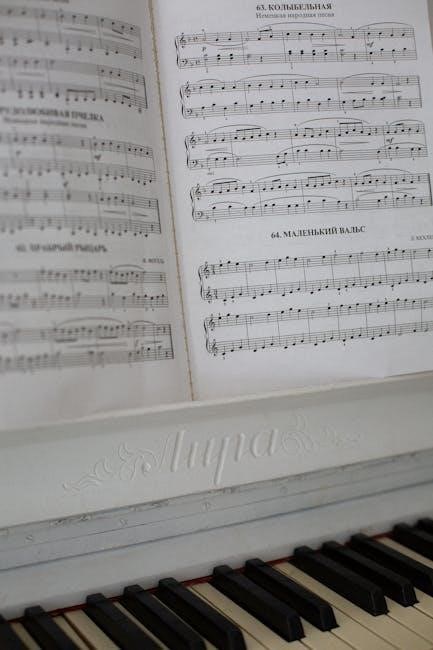
A piano book for beginners will explain how the hammer action and string resonance contribute to the instrument’s rich tone․ While requiring regular tuning and maintenance‚ acoustic pianos provide an unparalleled tactile and auditory connection for aspiring musicians‚ offering a classic and immersive learning experience․
Digital Pianos: Features and Benefits
Digital pianos have become increasingly popular for piano learners‚ offering a range of features beneficial to beginners․ A comprehensive piano book PDF often includes a section comparing acoustic and digital options․ Key advantages include adjustable volume – ideal for quiet practice – and headphone compatibility for private lessons․
Many digital pianos simulate the feel of acoustic piano keys‚ aiding in technique development․ They also offer built-in metronomes‚ recording capabilities‚ and various instrument sounds‚ enhancing the learning experience․
Furthermore‚ digital pianos eliminate the need for tuning and require less maintenance․ A beginner can benefit from the convenience and versatility‚ making them a practical choice for those starting their musical journey․ They provide a cost-effective alternative without sacrificing essential learning tools․
Essential Piano Basics Covered in Beginner PDFs
Beginner piano PDFs systematically teach fundamental skills‚ including musical notation‚ proper piano posture‚ and key identification․
These resources build a strong foundation for aspiring pianists․
Understanding Musical Notation
Beginner piano books in PDF format dedicate significant attention to deciphering musical notation‚ the language of music․ This crucial section typically begins with explaining the staff – the five horizontal lines and four spaces where notes are placed․
You’ll learn to identify treble and bass clefs‚ understanding which notes each represents․ The PDF will illustrate how notes themselves indicate pitch‚ while their shapes determine duration (whole‚ half‚ quarter‚ eighth notes‚ etc․)․
Rests‚ representing silence‚ are also thoroughly explained․ Furthermore‚ these resources introduce time signatures‚ dictating the rhythm of a piece‚ and key signatures‚ indicating sharps or flats․
Exercises often involve reading simple melodies and rhythms‚ gradually increasing in complexity․ Understanding these foundational elements is paramount to progressing beyond rote learning and truly interpreting musical scores․
Piano Posture and Hand Position
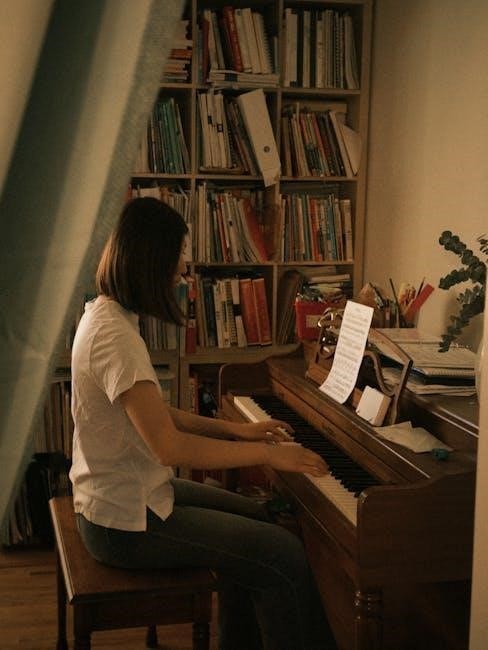
A good beginner piano book PDF emphasizes the importance of correct posture and hand position from the outset․ Proper technique prevents strain and facilitates efficient playing․ Typically‚ it advises sitting at a height allowing forearms to be parallel to the floor․
The back should be straight‚ but relaxed‚ and feet flat on the floor or a footrest․ Regarding hand position‚ the PDF will illustrate a naturally curved shape‚ as if holding a small ball․
Fingers should be rounded‚ striking the keys with the pads‚ not the fingertips․

Wrist flexibility is also highlighted‚ avoiding stiffness or excessive bending․
Exercises often focus on maintaining this correct form while playing simple scales or chords․ These beginner piano books often include diagrams and illustrations to visually demonstrate the ideal technique‚ ensuring a solid foundation for future progress and preventing bad habits․
Piano Key Identification and Note Chart
A crucial component of any beginner piano book PDF is a clear explanation of piano key identification and a comprehensive note chart․ These resources demystify the keyboard layout for newcomers․
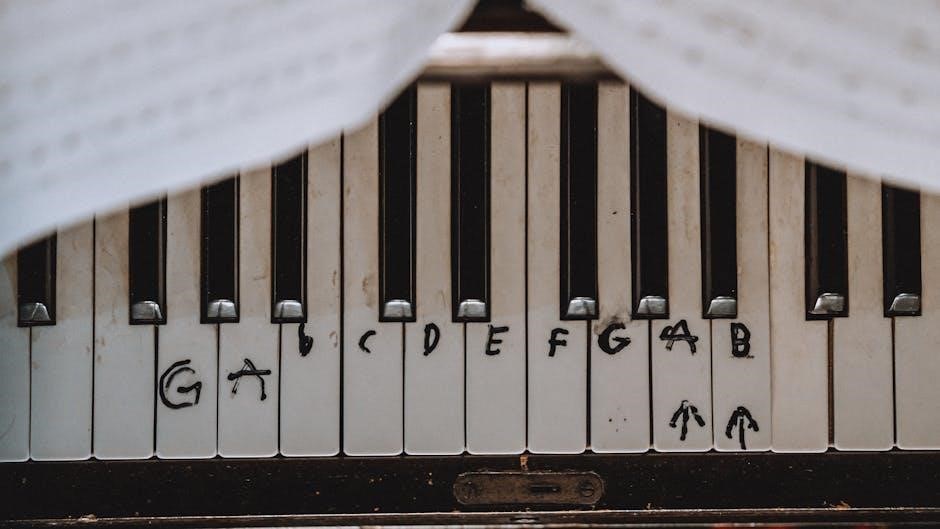
Typically‚ the PDF will visually illustrate the repeating pattern of black and white keys‚ explaining how to locate middle C – a fundamental reference point․ It will detail how notes are named (A‚ B‚ C‚ D‚ E‚ F‚ G) and their corresponding positions on the keyboard․
The note chart will often show the entire range of the piano‚ indicating sharps and flats․
Understanding the relationship between notes and their positions is vital for reading music․
Many beginner piano books include exercises to practice identifying notes quickly and accurately‚ building a strong foundation for musical literacy and enabling the student to confidently navigate the keyboard․

Finding Free Piano Beginner PDFs
Numerous websites offer free piano beginner PDFs‚ providing accessible learning materials․ Downloading piano books is easy‚ but evaluating resource quality is essential for effective progress․
Top Websites Offering Free Downloads
Several online platforms specialize in providing free piano beginner PDFs‚ catering to diverse learning preferences․ Musicnotes․com often features a selection of beginner-friendly arrangements and exercises available for download․ 8notes․com is another valuable resource‚ offering a wide range of sheet music‚ including simplified pieces suitable for novices․
Free-scores․com boasts an extensive library of free sheet music‚ encompassing various genres and skill levels‚ making it a great place to discover beginner piano books in PDF format․ Additionally‚ many music education websites and blogs regularly publish free downloadable content‚ including lesson excerpts and practice materials․ Websites like Virtual Piano and dedicated piano tutorial blogs frequently offer free PDF resources as lead magnets or supplementary materials․
Remember to always check the terms of use and copyright restrictions before downloading and utilizing any free resources․
Evaluating the Quality of Free Resources
While numerous free piano beginner PDFs are available‚ assessing their quality is crucial for effective learning․ Look for resources created by qualified music educators or experienced pianists; author credentials matter․ Check for clear‚ accurate musical notation and well-structured lessons that progress logically․
Beware of PDFs with excessive errors‚ poor formatting‚ or incomplete explanations․ A good resource will offer a balance of theory‚ exercises‚ and simple songs for practice․ Consider the overall presentation – a visually appealing and easy-to-navigate PDF is more conducive to learning․ Read user reviews or seek recommendations from online piano communities to gauge the resource’s effectiveness․
Don’t hesitate to supplement free materials with other learning tools if needed‚ ensuring a well-rounded and comprehensive approach to piano education․
Content Typically Found in Beginner Piano Books (PDF)
Beginner piano books (PDF) commonly include step-by-step tutorials‚ finger dexterity exercises‚ and simple songs for practice․
These resources build foundational skills progressively‚ making learning enjoyable and effective․
Step-by-Step Tutorials
Step-by-step tutorials are a cornerstone of any effective beginner piano book PDF․ These tutorials break down complex concepts into manageable‚ easily digestible segments‚ guiding the learner through each stage of the process․ They typically begin with the very basics – understanding the piano keyboard layout‚ identifying notes‚ and learning proper hand positioning․
Good tutorials won’t just tell you what to do; they’ll show you‚ often with diagrams or illustrations․ They’ll then walk you through simple exercises‚ building upon previously learned skills․ Expect to find tutorials covering reading musical notation‚ playing basic chords‚ and coordinating both hands․ The best resources offer a logical progression‚ ensuring a solid foundation before introducing more challenging material․
Furthermore‚ these tutorials often incorporate practice tips and common mistakes to avoid‚ accelerating the learning curve․ They aim to simplify the learning process‚ making it less daunting for absolute beginners and fostering a sense of accomplishment with each completed step․
Exercises for Finger Dexterity
Exercises for finger dexterity are crucial components within a comprehensive beginner piano book PDF․ Developing independent finger control is fundamental to playing the piano effectively‚ and these exercises are specifically designed to build that strength and coordination․ You’ll commonly find exercises focusing on scales‚ arpeggios‚ and Hanon-style drills․
These aren’t about playing beautiful music initially; they’re about training your fingers to move accurately and efficiently․ A good PDF will start with simple five-finger exercises‚ gradually increasing the range and complexity․ Expect to see instructions on proper technique – curved fingers‚ relaxed wrists‚ and consistent pressure․
Regular practice of these exercises‚ even for short periods‚ will significantly improve your technique‚ speed‚ and overall playing ability․ They lay the groundwork for tackling more challenging pieces and mastering various musical styles․ Consistency is key to seeing noticeable improvements in finger dexterity․
Simple Songs for Practice
A quality beginner piano book PDF won’t just focus on technical exercises; it will also include a selection of simple songs for practice․ These songs are carefully chosen to reinforce the concepts learned and provide a more enjoyable learning experience․ Expect to encounter familiar melodies like “Mary Had a Little Lamb‚” “Hot Cross Buns‚” or simplified versions of folk tunes․
These pieces typically utilize a limited range of notes and basic rhythms‚ allowing beginners to apply their newly acquired skills in a musical context․ The PDF will often present the music in both standard notation and‚ sometimes‚ with lettered notes to aid in reading․
Learning to play these songs builds confidence and motivates continued practice․ They demonstrate how musical notation translates into actual sound‚ solidifying understanding and fostering a love for playing the piano․
Beyond the PDF: Additional Learning Resources
While piano book PDFs are excellent‚ consider supplementing your learning with online piano lessons and a helpful glossary of piano terms for faster progress․
Online Piano Lessons
Online piano lessons offer a dynamic and interactive complement to static beginner piano book PDFs․ These platforms frequently provide personalized feedback‚ allowing students to correct technique and address specific challenges in real-time – something a PDF simply cannot do․
Many services cater specifically to beginners‚ breaking down complex concepts into manageable steps․ Interactive features‚ like virtual keyboards and note recognition software‚ enhance the learning experience and accelerate progress․
Furthermore‚ online lessons often include a structured curriculum‚ ensuring a comprehensive understanding of music theory and practical application․ Some platforms even offer the opportunity to learn at your own pace‚ fitting lessons into your schedule․ Consider exploring options that offer trial periods to find a style and instructor that suits your learning preferences‚ maximizing the benefits beyond your piano book․
Glossary of Piano Terms
A comprehensive glossary of piano terms is an invaluable addition to any beginner piano book PDF․ Music is filled with specialized vocabulary‚ and understanding these terms is crucial for interpreting sheet music and following instructions effectively․
Common terms like “tempo‚” “dynamics‚” “staccato‚” and “legato” can initially seem daunting‚ but a well-defined glossary demystifies them․ It bridges the gap between reading instructions and actually playing the piano․
Furthermore‚ a glossary should explain musical symbols‚ such as clefs‚ time signatures‚ and accidentals․ Having quick access to these definitions within or alongside your PDF eliminates constant interruptions to search for explanations online․ This focused resource enhances comprehension and allows beginners to concentrate on developing their skills‚ rather than deciphering terminology․

Premium Piano Classes vs․ Free PDFs
While free piano beginner PDF resources offer an accessible entry point‚ comparing them to premium classes reveals key differences․ PDFs provide structured lessons and exercises‚ ideal for self-paced learning‚ but lack personalized feedback․
Premium classes‚ conversely‚ offer direct interaction with an instructor‚ allowing for customized guidance and correction of technique․ This personalized approach accelerates progress and prevents the development of bad habits․
PDFs are cost-effective‚ but may not cater to individual learning styles․ Premium classes often include supplementary materials and a supportive learning community․ Choosing between the two depends on your budget‚ discipline‚ and desired level of support․ A beginner might start with a PDF to gauge interest‚ then transition to classes for deeper instruction․