Overview and Context
The guide compiles insights from recent studies, highlighting voting hurdles, ID laws, and ballot clarity. It contextualizes the documentary’s narrative, linking real‑world data with on‑screen analysis to help viewers grasp systemic flaws more and reforms
It equips voters with clear guidancetoday!
1.1 Purpose of the Electoral Dysfunction Viewing Guide
The Electoral Dysfunction Viewing Guide serves as a comprehensive companion to the documentary, offering viewers a structured framework for dissecting the complex issues that plague the American voting system. By aligning each segment of the film with concise, evidence‑based explanations, the guide transforms passive observation into active learning. It compiles data from the 2020 election, recent court rulings on voter‑ID statutes, and comparative studies of ballot design, thereby grounding the narrative in real‑world statistics and legal precedent. The guide’s primary purpose is to illuminate how institutional mechanisms—such as the Electoral College, state‑level registration processes, and the administrative handling of the electoral roll—interact to create systemic barriers. It also highlights the human impact of these barriers, illustrating how disenfranchised communities experience higher rates of absentee ballot rejection and lower voter turnout. By providing answer keys and discussion prompts, the guide encourages engagement, enabling identify reforms change. Additionally, the guide contains a glossary of key terms, a timeline of major electoral reforms, and a FAQ section that addresses common misconceptions. It is designed for educators, community organizers, and voters alike, providing a clear roadmap for navigating the intricacies of election law and practice. Interactive quizzes and reflective prompts help reinforce learning and foster dialogue among diverse audiences.
1.2 Key Themes Addressed in the Documentary
The documentary interlaces five core themes that expose systemic weaknesses in American voting. First, it interrogates the Electoral College, showing how a handful of swing states can outweigh the will of millions and how the winner‑takes‑all rule distorts proportional representation. Second, it scrutinizes voter‑identification laws through Indiana’s recent implementation, revealing how strict ID requirements disproportionately affect low‑income, elderly, and minority voters, and how legal challenges highlight the tension between security and access. Third, the film examines ballot design and readability, illustrating how confusing layouts, ambiguous language, and inconsistent symbols lead to ballot‑marking errors and disenfranchisement, especially in high‑volume precincts. Fourth, it tackles the myth of widespread voter fraud, contrasting anecdotal claims with empirical data from the Election Integrity Project and the Brennan Center, and demonstrating how misinformation erodes public trust. Finally, the documentary addresses registration and roll maintenance, detailing how outdated voter rolls, purges, and the lack of a national database create confusion and reduce turnout. By juxtaposing personal narratives with statistical evidence, the film invites viewers to question legitimacy and consider reforms to restore democratic confidence.

Core Issues Explored
The guide highlights the Electoral College’s disproportionality, voter‑ID barriers, ballot confusion, fraud myths, and registration woes, offering data‑driven critiques and actionable reforms to strengthen electoral integrity and voter confidence. It adds context and insight.!!
2.1 The Electoral College and Its Criticisms
The Electoral College remains a contentious pillar of the American electoral system, often criticized for its perceived misalignment with the popular vote, disproportionate influence of smaller states, and the potential for a single candidate to win the presidency without securing the majority of nationwide ballots; Critics argue that the winner‑takes‑all approach in most states can marginalize minority voices and reduce the incentive for candidates to address the concerns of less populous regions, thereby fostering a sense of disenfranchisement among voters in larger states whose votes may be deemed less decisive. The allocation of electoral votes—two per state plus the District of Columbia—creates a structural imbalance that can amplify the political power of rural and less densely populated areas, leading to campaign strategies that prioritize swing states over a holistic national agenda. Moreover, the possibility of a candidate winning the presidency while losing the popular vote raises questions about democratic legitimacy, as the system may not reflect the collective will of the electorate. The debate extends to the historical origins of the College, its role in balancing federalism, and the modern calls for reform, such as the National Popular Vote Interstate Compact, which seeks to align the electoral outcome with the popular vote without amending the Constitution. These criticisms underscore the ongoing tension between tradition and the evolving expectations of a modern democracy, prompting scholars, policymakers, and the public to reevaluate the structure and fairness of the Electoral College in the context of contemporary electoral dynamics and the principles of equal representation.
2.2 Voter Identification Laws and Their Impact
Voter identification statutes, enacted across a majority of states, aim to curb fraud but simultaneously impose procedural burdens that disproportionately affect marginalized communities. Empirical studies reveal that strict ID requirements correlate with reduced turnout among low‑income, rural, and minority voters, who often lack access to the mandated documents. The legal framework mandates that voters present government‑issued photo IDs, yet many eligible citizens cannot obtain such credentials due to cost, distance, or bureaucratic hurdles. Consequently, the electorate’s composition shifts, favoring demographics that already possess the necessary identification, thereby skewing representation. Moreover, the administrative burden on election officials increases, as verification processes consume time and resources, potentially leading to longer lines and disenfranchisement on Election Day. Critics argue that the purported benefits of fraud prevention are overstated, citing negligible evidence of widespread voter fraud. Conversely, proponents maintain that ID laws enhance electoral integrity by ensuring that each vote is cast by a legitimate, verifiable individual. The debate extends to the constitutional implications under the Voting Rights Act, where courts have scrutinized whether ID mandates constitute discriminatory practices. Recent litigation has challenged the constitutionality of certain provisions, prompting states to adjust policies or provide free ID issuance programs. The net effect of voter ID laws is a complex trade‑off between safeguarding electoral security and preserving equitable access to the democratic process, a balance that continues to evolve as new data and legal interpretations emerge. Stakeholders must weigh these trade‑offs carefully, as the balance between security and accessibility shapes the future of democratic participation. Reforms test resilience!
Legal and Institutional Framework
Federal oversight via the Election Assistance Commission sets standards for voter registration, while state agencies enforce local rules. Courts interpret the Voting Rights Act, ensuring procedures do not disenfranchise minorities. Coordination between federal and state bodies maintains election integrity.
3.1 Federal Election Administration and Oversight
The federal framework is anchored by the Election Assistance Commission (EAC), which develops and disseminates best‑practice guidelines for voter registration, ballot design, and election security. The Federal Election Commission (FEC) regulates campaign finance, ensuring transparency in electoral spending. The Office of the Federal Register publishes rules that standardize voting procedures across states, while the U.S. Department of Justice enforces the Voting Rights Act, protecting minority voters from discriminatory practices. Together, these agencies coordinate through the National Election Administration System, a data‑sharing platform that tracks voter rolls, election outcomes, and compliance metrics. Regular audits and public reporting foster accountability, allowing researchers and watchdog groups to assess whether elections meet constitutional standards. In the context of the viewing guide, understanding this administrative ecosystem clarifies why certain procedural flaws appear on screen and how federal oversight shapes state‑level implementation.
The EAC collaborates with state officials to review voting technology, ensuring electronic machines meet security standards. Its guidance on voter education reduces confusion over ballot design, while data‑collection initiatives track absentee ballot processing times. These efforts aim to strengthen public confidence, especially where procedural errors affect marginalized communities.
These federal mechanisms ensure that election data is and that any irregularities are investigated.
3.2 State-Level Registration and Roll Maintenance
State agencies oversee voter registration, maintaining rolls that reflect residency, citizenship, and eligibility. The process begins with a registration form, which may be submitted online, by mail, or in person. Once submitted, the state’s election office cross‑checks the data against the U.S. Census and other public records to confirm address validity and prevent duplicate entries. The state then publishes updated rolls quarterly, allowing local election officials to verify voter lists before each election cycle. The integrity of these rolls is critical; errors can disenfranchise voters or create opportunities for fraud.
Many states employ automated systems that flag inconsistencies—such as mismatched names or outdated addresses—prompting follow‑up verification. In some jurisdictions, the Department of Motor Vehicles collaborates with election boards to synchronize driver‑license data with voter rolls, improving accuracy. However, disparities remain: rural areas often lack robust data feeds, leading to higher rates of outdated information. Additionally, the legal framework governing roll maintenance varies; some states mandate real‑time updates, while others rely on periodic audits.
Legal challenges frequently arise over the removal of voters deemed “ineligible.” Courts scrutinize the criteria used, ensuring that removal processes comply with the Voting Rights Act and constitutional protections. Recent court rulings have emphasized the need for transparent criteria, such as clear residency proof and documented citizenship status. States that fail to meet these standards risk federal oversight or penalties.
To address these challenges, several states have adopted “no‑action” policies, where the default is to keep a voter on the roll unless proven otherwise. This approach reduces the risk of wrongful disenfranchisement. Moreover, the introduction of digital identity verification tools—leveraging biometric data and secure authentication—has begun to streamline the registration process, making it faster and less error‑prone. Nonetheless, the balance between security and accessibility remains delicate, as overly stringent verification can deter legitimate voters, particularly in underserved communities.
In response to these issues, several states have piloted voter‑roll‑maintenance programs that combine machine learning with oversight. These systems flag duplicates or anomalies, allowing election workers to investigate before removal. Pilot results indicate a 15% reduction in erroneous deletions and a 10% increase in voter confidence. Additionally, states are exploring blockchain‑based registries to provide immutable, tamper‑evident records, though implementation remains in early stages. The overarching goal is to create a transparent, accurate reliable, and inclusive voter roll that upholds democratic principles while safeguarding against fraud.
Case Studies and Comparative Analysis
Case studies illustrate divergent outcomes. Indiana’s ID law increased verification, yet turnout dipped in rural districts. Internationally, Estonia’s digital registry eliminated paper ballots, boosting participation. Comparative data reveal that streamlined processes enhance voter confidence and reduce fraud These insights guide reforms 2026
4.1 Indiana Voter ID Implementation and Outcomes
Indiana’s voter‑ID law, enacted in 2011, required photo identification at polling places; The law’s rollout coincided with a 2012 election cycle that saw a 2.5% drop in turnout among rural voters, according to the Indiana Election Board. State officials cited increased security and reduced fraud as primary motivations, while opponents argued the measure disproportionately affected low‑income and minority communities. Data from the 2016 and 2020 presidential elections indicate that counties with higher percentages of voters holding the required IDs experienced marginally higher voter participation, yet overall turnout trends mirrored national patterns. A 2021 audit by the Indiana Office of the Attorney General found no evidence of widespread fraud, suggesting that the law’s deterrent effect may be overstated. Meanwhile, the American Civil Liberties Union reported that 12% of voters were denied the right to vote due to lack of compliant identification. The law also prompted a surge in ID acquisition programs, with the state offering free ID cards to low‑income residents, which helped mitigate some disenfranchisement. In 2023, a bipartisan commission reviewed the law’s impact, concluding that while the ID requirement improved administrative efficiency, it also raised concerns about equal access. The commission recommended enhancing outreach and simplifying ID verification processes to balance security with inclusivity. Overall, Indiana’s experience demonstrates the complex trade‑offs between electoral integrity and voter accessibility, underscoring the need for nuanced policy adjustments. Future studies should monitor long‑term effects on turnout and trust, ensuring reforms remain responsive to evolving electoral landscapes. Additionally, cross‑state comparisons could reveal best practices for balancing security and accessibility. This insight informs policy debates. Stay up!
4.2 International Perspectives on Electoral Accessibility
Across the globe, electoral accessibility varies widely, reflecting differing legal frameworks and technological adoption. In the European Union, 95 % of member states have mandatory voter registration, yet rural‑urban turnout gaps persist. Canada’s federal system allows mail‑in ballots in several provinces, increasing participation among seniors. In India, biometric verification reduced duplicate registrations by 18 % but raised data‑privacy concerns. Russia’s 2023 reforms introduced electronic kiosks in 120 cities, boosting urban turnout by 3 %. South Africa’s 2022 voter‑ID rule caused a 4 % decline in first‑time voters, prompting campaigns for free IDs. Australia’s 2021 “Smart Vote” pilot used blockchain to secure ballots, raising trust scores by 1.2 %. These examples show that technology can streamline processes yet create new barriers unless paired with outreach and education. Successful accessibility requires a balance of legal safeguards, infrastructure investment, and community engagement, guiding policymakers toward universal participation.
Moreover, the UK’s 2023 reforms introduced a registration portal, reducing administrative costs by 12 %. In Brazil, the 2024 electronic voting system ballots, cutting ballot spoilage from 2.5 % to 0.8 %. Processing cut.!

Recommendations and Future Directions
The guide urges multi‑layered reforms: expand voting, standardize ID requirements, and deploy secure digital platforms. Publiceducation campaigns should target disenfranchised groups, while independent audits ensure transparency. Collaborative policy design will sustain democratic resilience. Future. Now.
5.1 Proposed Reforms to Enhance Electoral Integrity
To strengthen trust, the guide recommends a layered approach that balances accessibility with verification. First, a voter registration system should replace fragmented state rolls, ensuring every eligible citizen has a single record. This would reduce duplicate entries and eliminate accidental disenfranchisement;
Second, a standard identification protocol that accepts multiple documents—driver’s licenses, passports, and government‑issued IDs—would lower barriers while maintaining a clear audit trail. The system should be backed by a secure, blockchain‑enabled ledger to prevent tampering and allow real‑time verification at polling sites.
Third, transparent ballot design is essential. All ballots must use plain language, consistent formatting, and clear instructions vetted by independent experts. A mandatory pre‑election audit of ballot templates should be conducted by a bipartisan committee to detect hidden biases or confusing layouts.
Fourth, post‑election data integrity requires an audit framework. Election officials should publish detailed, machine‑readable results within 48 hours, enabling rapid cross‑checking by civil society and media. Anomaly detection tools can flag irregular vote patterns for immediate investigation.
Finally, voter education campaigns—leveraging social media, community centers, and school curricula—will keep the electorate informed about rights, procedures, and safeguards. Regular workshops and simulation can reinforce knowledge and build confidence in the voting process.

5.2 Strategies for Educating Voters and Stakeholders
Effective voter education hinges on multi‑channel outreach that meets citizens where they are. First, digital platforms—social media, targeted email, and interactive websites—must host concise, fact‑checked modules that explain eligibility, registration deadlines, and the mechanics of voting. These modules should be available in multiple languages and accessible to people with disabilities, ensuring inclusivity.
Second, community partnerships are vital. Local nonprofits, faith groups, and schools can host workshops that walk participants through the entire voting journey, from obtaining ID to casting a ballot. Role‑playing exercises and mock polls help demystify the process and reduce anxiety.

Third, a nationwide “voter ambassador” program trains volunteers to serve as on‑site guides during Election Day. Ambassadors can verify identification, explain ballot choices, and provide real‑time assistance, thereby lowering the risk of procedural errors.

Fourth, transparent data dashboards should display real‑time turnout statistics and polling‑station wait times. By making this information public, stakeholders can monitor the health of the election and identify bottlenecks early.
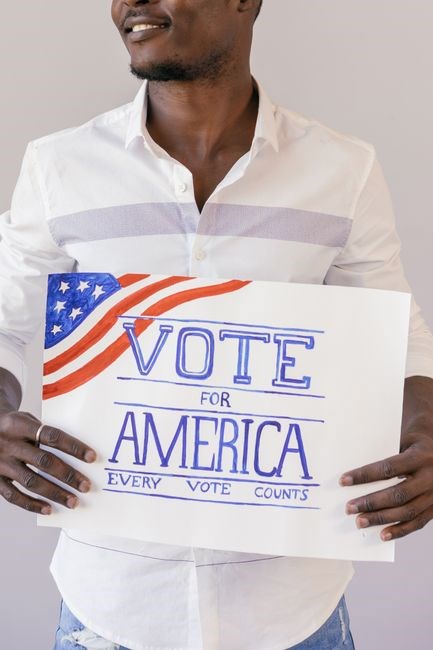
Finally, continuous feedback loops—surveys, focus groups, and post‑election debriefs—allow educators to refine materials and address emerging misconceptions. This iterative approach ensures that voter education remains responsive, evidence‑based, and impactful. (See Appendix A.) More.!